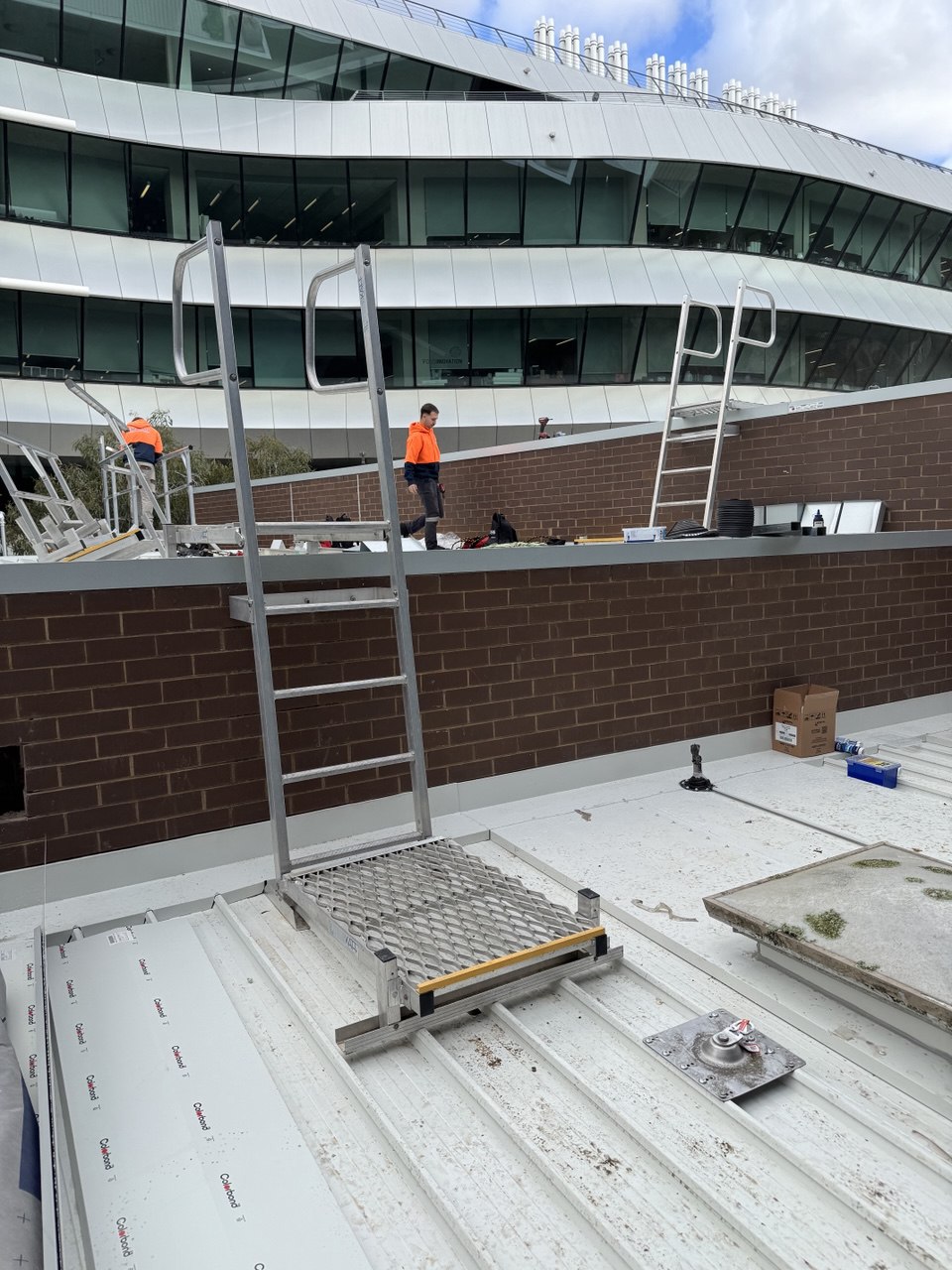
If you manage a building, whether a school, a commercial property, a council facility or a strata complex, height safety compliance sits on your desk. Most facilities managers we speak to are either unaware of the full scope of that obligation or are relying on systems that haven't been inspected in years.
The Facilities Manager's OHS Exposure
Under the Occupational Health and Safety Act 2004 (Vic), anyone who manages or controls a workplace has a duty to ensure that the workplace is safe for workers — including contractors who access the building to perform maintenance, inspections or repairs.
As a facilities manager, you are typically the person who controls access to the building and engages contractors to work on it. That puts you, and the organisation you represent, squarely within the section 26 duty for those contractors, and that carries real OHS obligations.
In plain terms: if a contractor falls from your rooftop because the anchor point they were using wasn't certified, you are exposed. Not just the contractor's employer. You, and the organisation you represent.
The key principle
You cannot discharge your OHS duty simply by engaging a contractor and assuming they'll look after themselves. You must ensure the workplace itself — including the height safety systems on the building — is safe and compliant before any contractor accesses it.
What Facilities Managers Are Responsible For
Height safety compliance for a building under your management covers several distinct obligations:
- Maintaining an asset register of all height safety systems on the building — every anchor point, static line, roof access ladder and davit system
- Annual recertification of all fixed systems by a competent person, at intervals of no more than 12 months, in accordance with AS/NZS 1891.4
- Ensuring systems are current before any contractor accesses the roof — if a certification has lapsed, the system must not be used
- Retaining documentation — inspection certificates, corrective action reports and load test records must be kept on file and produced if requested by WorkSafe
- Acting on defects — if an inspection identifies non-compliant systems, you have an obligation to remediate them within a reasonable timeframe and not permit access in the meantime
The Maintenance Contractor Problem
One of the most common compliance gaps we see is what we call the maintenance contractor problem. A facilities manager engages a contractor to service the HVAC, clean the gutters or inspect the solar panels. The contractor goes up on the roof. Nobody asks whether the anchor points are current. Nobody checks the certification tags. The work gets done, the contractor leaves, and everyone moves on.
Until something goes wrong.
At that point, WorkSafe investigators will ask a very direct question: when were the height safety systems on that roof last inspected and certified? If the answer is "we're not sure" or "a few years ago", the facilities manager and the organisation they represent face serious scrutiny — regardless of whether the contractor also had obligations.
The simple fix is a process: before any contractor accesses your roof, confirm that your height safety systems are current. Keep the certificates somewhere accessible. Make it part of your contractor management procedure.
What a Compliance Audit Gives You
If you're not sure what height safety systems are on your building — or whether they're compliant — the right starting point is an independent compliance audit. This gives you:
- A complete inventory of every height safety system on the building
- An assessment of each system against current Australian Standards
- A written report with photographic evidence
- A prioritised corrective action schedule with indicative costs for any rectification required
- A documented record that you have taken reasonable steps to identify and address the risk
That last point matters. In the event of a WorkSafe investigation, demonstrating that you proactively audited your building and acted on the findings is evidence of reasonable and responsible management. It doesn't guarantee immunity, but it is a materially different position to being unable to produce any inspection records at all.
Multi-Building and Multi-Site Portfolios
For facilities managers responsible for multiple buildings — a school cluster, a council portfolio, a commercial property group — the challenge is scale. Keeping track of inspection schedules, certification dates and corrective action items across a dozen or more buildings is genuinely difficult without a system.
This is where an ongoing relationship with a height safety provider pays off. Rather than managing each building separately and reactively, a good provider will maintain a schedule for your entire portfolio, remind you when inspections are due, and ensure documentation is consistent and accessible across all sites.
We manage annual recertification programs for 200+ Victorian schools on exactly this basis — one contact, consistent documentation, nothing falling through the cracks.
Not sure where your buildings stand?
O'Brien Height Safety Solutions conducts compliance audits for facilities managers across Victoria — schools, commercial properties, council facilities and strata complexes. We'll tell you exactly what you have, whether it's compliant, and what needs to be done. Book an audit →
The Practical Checklist
If you manage a building with roof access, run through this now:
- Do you have a register of all height safety systems on your building?
- Have all systems been inspected and certified within the last 12 months?
- Do you have written inspection certificates and reports on file?
- Is there a process in place to check system currency before contractors access the roof?
- If any systems were found non-compliant at the last inspection, have they been remediated?
- Do you know when your next inspections are due?
If you can't answer yes to all of these, it's worth getting on top of it before a contractor goes up on your roof — not after.
Standards and legislation referenced
- Occupational Health and Safety Act 2004 (Vic): section 21 (employer duty, which extends to contractors on matters the employer controls), section 23 (duty to people other than employees) and section 26 (duty of anyone who manages or controls a workplace).
- Occupational Health and Safety Regulations 2017 (Vic), Part 3.3 Prevention of falls: applies where there is a risk of a fall of more than 2 metres and sets the order of controls, from working on the ground, to passive fall prevention (guardrails), to work positioning and fall arrest systems.
- AS/NZS 1891.4 Industrial fall-arrest systems and devices, Part 4: Selection, use and maintenance. Sets inspection intervals of no more than 12 months for anchorages and lifelines, and no more than 6 months for harnesses, lanyards and connectors.
- AS/NZS 5532:2013 Manufacturing requirements for single-point anchor devices used for harness-based work at height. Single-person anchors are rated to 15 kN.
- AS/NZS 1891.2 Horizontal lifeline and rail systems (static lines).
- AS 1657:2018 Fixed platforms, walkways, stairways and ladders, including permanent roof access ladders and guardrails.
Last reviewed 27 September 2026 by O'Brien Height Safety Solutions. General guidance only, not legal advice. Check your specific site with a competent height safety inspector.